
1. A brief history of Netherfield
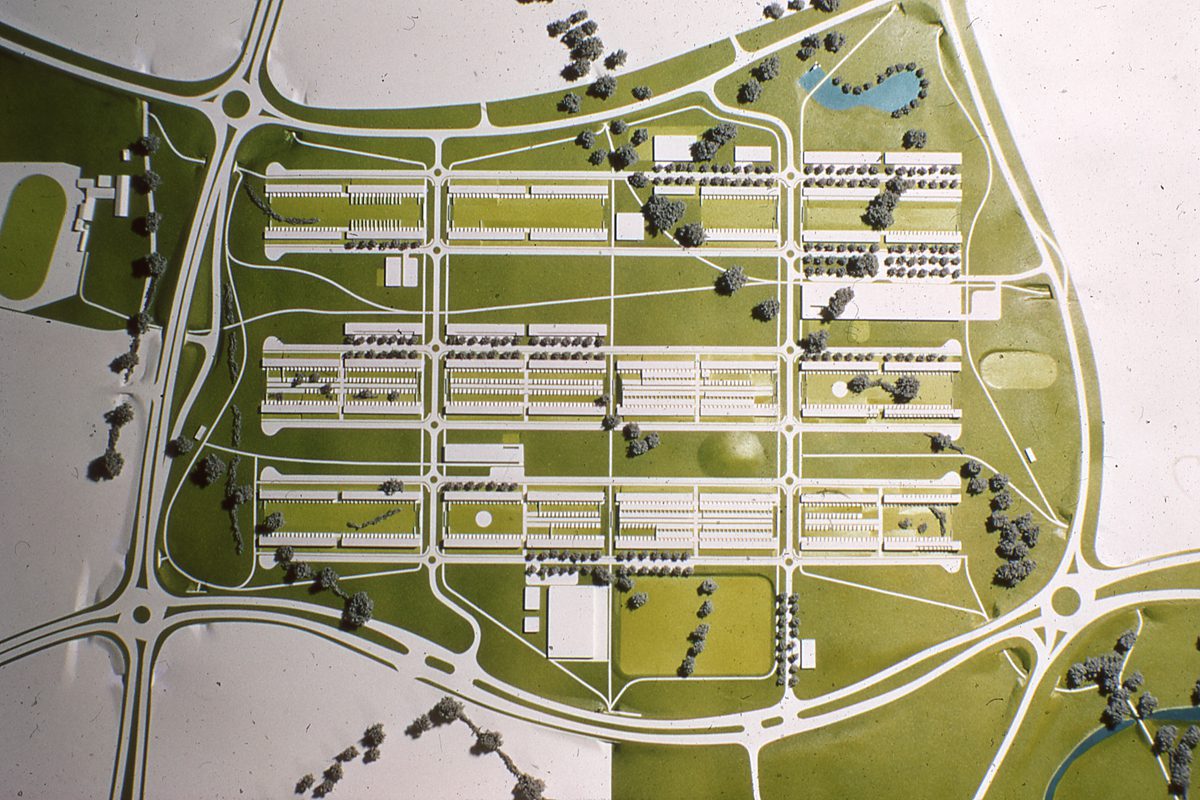
Netherfield was masterplanned in the early 1970s as one of the first rental grid squares in the new city of Milton Keynes. Designed between 1971 and 1972 and built from 1972 to 1977, it delivered 1,043 homes, making it the largest rental scheme in the city at the time. The first houses were occupied in 1974; by 1981 around 2,650 people lived there, rising to 2,850 by 1989, which made Netherfield one of Milton Keynes’ biggest early communities. [darrenumney]
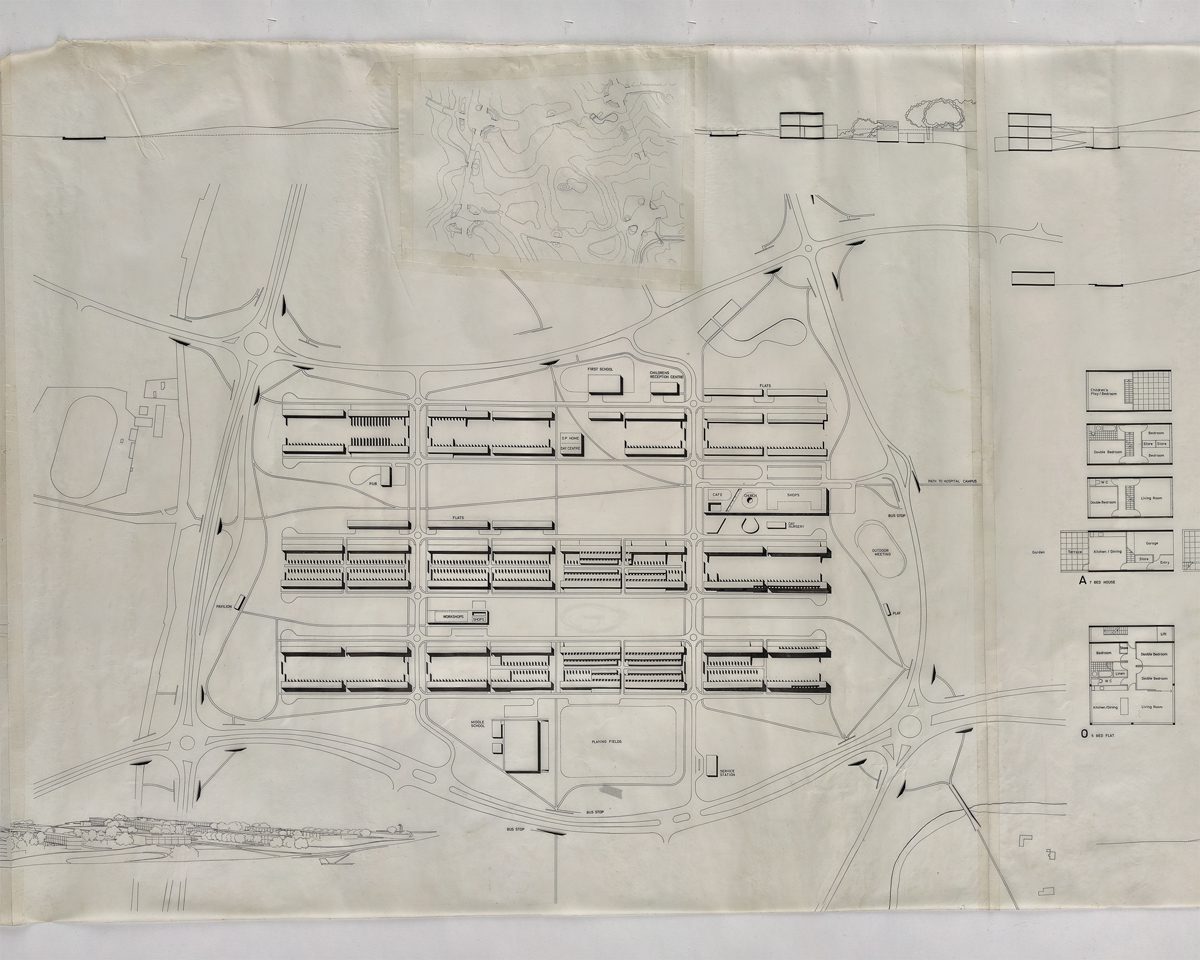
The masterplan was produced for Milton Keynes Development Corporation by a group of young architects – Christopher Cross, Jeremy Dixon, Michael Gold and Edward Jones – nicknamed the Grunt Group. Their brief was ambitious: create around 1,000 dwellings, at relatively low density, meeting Parker Morris space standards while still hitting tight government cost limits and Milton Keynes’ policy of mixed tenure. [livingarchive.org]
2. Design concept and 1970s modernism
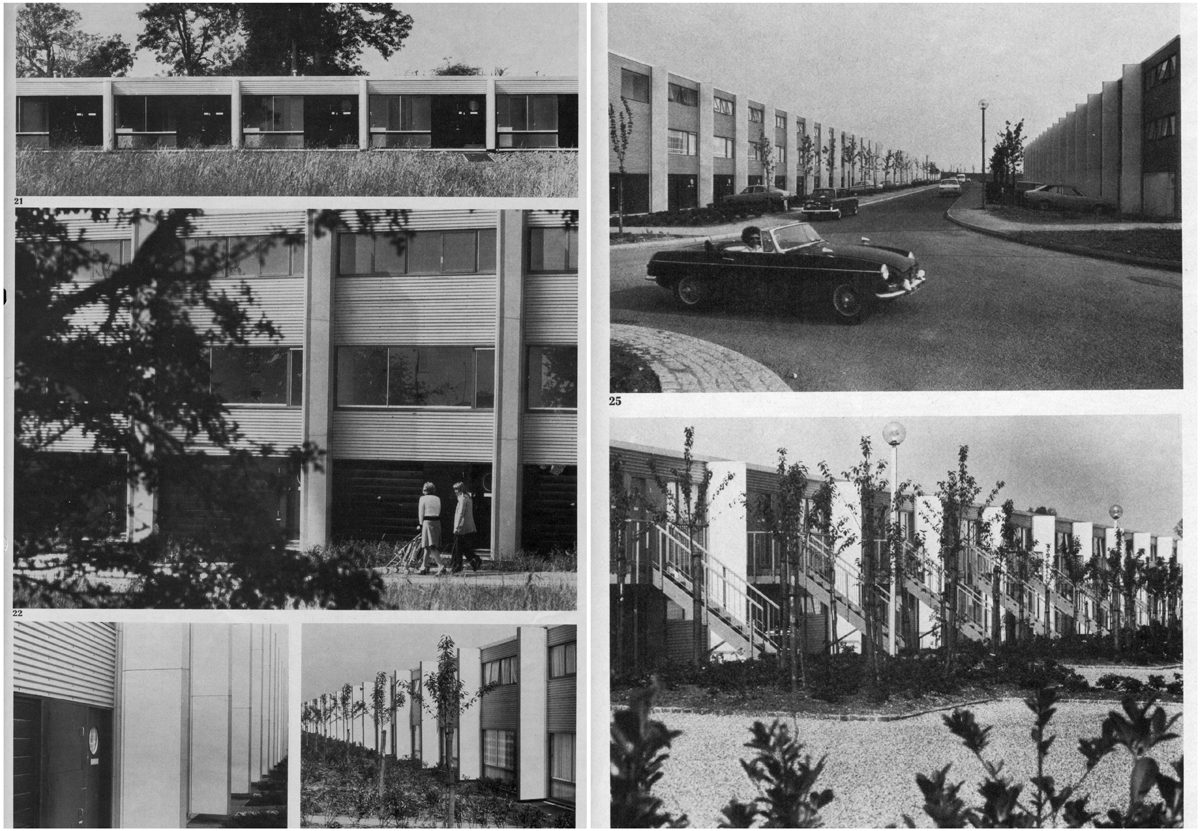
Netherfield is best known for its dramatic, long straight terraces that run along the slope of the site, maintaining a strict horizontal roof line even as the ground falls away. The houses use a timber‑framed system with aluminium‑clad facades to the street, with the rear elevations originally in timber and the whole composition reading as one continuous, linear piece of architecture. This approach was set out in a striking 1m x 6m montage drawing – the “Netherfield scroll” – that showed the estate as a continuous streetscape embedded in its landscape. [modernism-in-metroland.co]
The design reflects 1970s British modernism in several ways:
- Strong geometry and repetition, with terraces up to 300 metres long. [darrenumney]
- Clear separation of cars and pedestrians, with parking and access handled on one side and parkland on the other. [darrenumney]
- A focus on internal space standards and family living, in line with Parker Morris requirements. [livingarchive.org]
Colour and small details were used to humanise the bold form: vertical fins were painted in primary colours to indicate storey heights, and each front door had a distinctive porthole window that residents could personalise. At the time, Milton Keynes’ leaders saw Netherfield as offering “a rich environmental setting” with varied layouts, car accommodation and close access to play areas and open space. [darrenumney]
3. Resident experiences and emerging problems
As with many modernist estates, the gap between the original vision and lived reality widened over time. Early personalisation was modest – often limited to how residents decorated the porthole windows – because tenancies were tightly controlled and budgets were limited. Over the decades, municipal upgrades, especially replacement of original doors and windows with uPVC, have reduced some of the estate’s distinctive appearance. [darrenumney]
Several practical problems emerged:
- Use of relatively cheap materials and sometimes unskilled labour.
- Exposure of facades and roofs to weather on such a long, elevated site.
- High cost of maintaining extensive landscape elements and public spaces. [darrenumney]
These issues, combined with local authority letting policies and wider economic change, have contributed to periods of stigma and a “sink estate” image in some commentary. Surveys in recent years have found common issues of poor insulation, damp, mould and overheating in summer – typical of many 1970s timber‑frame estates, but very visible here because of Netherfield’s profile. [ecda.co]
4. Current condition and retrofit programmes
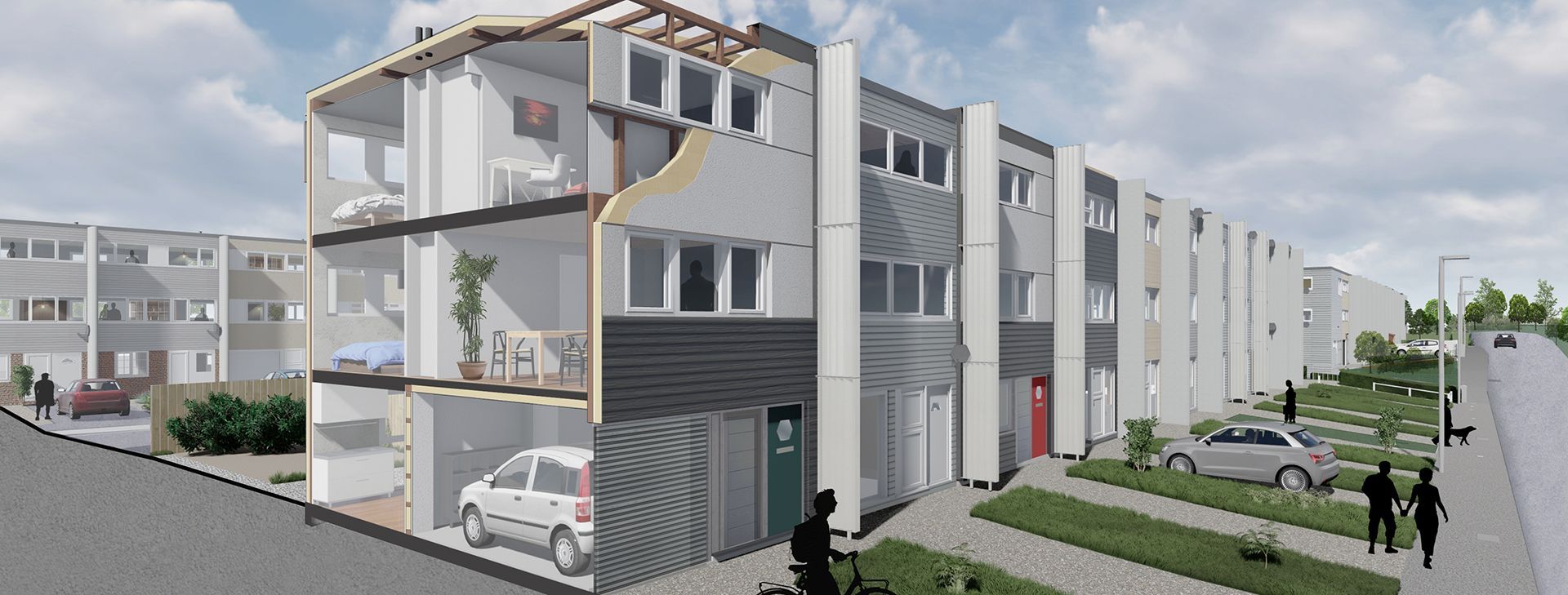
Netherfield today is in a transitional phase: its fabric has clear weaknesses, but there is major investment going into upgrades. A large‑scale retrofit programme is underway covering 302 council‑owned homes, led by Mears Group with design input from ECD Architects and Keegans. This work is funded through the government’s Social Housing Decarbonisation Fund (SHDF) Wave 1, with further properties supported under Wave 2.1. [thekeegansgroup]
Initial surveys confirmed that many homes were poorly insulated and suffering from damp, mould and summertime overheating. The retrofit package tackles these issues with measures such as: [ecda.co]
- • External wall and roof insulation.
- • High‑performance replacement windows and improved doors.
- • Controlled ventilation strategies to reduce condensation and mould.
- • Carefully designed changes to rear facades and external fins.
Planners and conservation officers have been closely involved to ensure that upgrades deliver warmer, cheaper‑to‑heat homes without destroying the long, linear character that makes Netherfield architecturally significant. The retrofit has been recognised within the industry, being shortlisted in regeneration and retrofit award categories, which underlines its importance as a national case study. [thekeegansgroup]
5. Regeneration, new homes and local priorities
Beyond the fabric retrofit, wider regeneration is also reshaping Netherfield. Milton Keynes City Council has reaffirmed regeneration as a priority, with Netherfield explicitly included in its programme of estate improvements. This covers housing, green spaces, sports facilities and local infrastructure, and positions the estate as a key site within the city’s long‑term growth plans. [milton-keynes.gov]
A notable element is the development of 66 new council homes at the former Cripps Lodge site in Netherfield. Higgins Partnerships has been appointed to build a mix of: [mkfm]
- Two and three‑bedroom bungalows.
- Three, four and five‑bedroom houses.
- One and two‑bedroom apartments.
These units are intended to meet varied local housing needs and are being designed to modern energy‑efficiency standards. Alongside retrofit, this adds new stock, diversifies the housing offer and helps support population stability on the estate. [mkfm]
6. Netherfield in the Milton Keynes context
Within the Milton Keynes grid, Netherfield is unusual. Many other grid squares follow Radburn‑influenced layouts with loops and cul‑de‑sacs and a finer grain of streets; Netherfield stands out for its uncompromising, kilometre‑scale terraces and strong visual identity. It was one of the earliest and largest rental areas and remains visually recognisable when compared with later, more conventionally suburban parts of the city. [livingarchive.org]
At the same time, its challenges echo those of other 1960s and 1970s estates in Milton Keynes and beyond – maintenance backlogs, mixed perceptions and the need to retrofit for carbon and comfort. The fact that Netherfield is treated as a heritage‑sensitive site, even without formal listing, marks it out as an architectural asset as well as a housing resource. [thekeegansgroup]
7. Future potential: what it means for residents and investors
Looking ahead, Netherfield’s future sits at the intersection of design heritage, social need and environmental policy. The large‑scale retrofit of more than 300 homes should:
- Improve day‑to‑day comfort through warmer, drier, less draughty homes. [thekeegansgroup]
- Reduce energy bills, which is particularly important for lower‑income households.
- Extend the life of the existing stock and protect the distinctive street elevations. [ecda.co]
New council homes and ongoing regeneration investment suggest that the local authority sees Netherfield as worth backing for the long term, rather than as a site for wholesale clearance. For the wider Milton Keynes housing market, that positions Netherfield as: [milton-keynes.gov]
- A benchmark project for how 1970s estates can be decarbonised while respecting their design.
- A potential opportunity area as perception shifts from “problem estate” to “heritage modernist neighbourhood with upgraded homes”. [thekeegansgroup]
For current and future residents, the combination of strong landscape setting, generous internal space standards by modern volume‑builder norms, and improving energy performance offers a more attractive living proposition than the estate’s reputation might suggest. For investors and landlords, the key questions are around ongoing maintenance obligations and how far retrofit works translate into reduced voids, more stable tenancies and long‑term resilience in the face of tightening energy and housing standards. [ecda.co]